How Music Supports Children's Development
Music is part of childhood long before children can explain what they hear.
From a baby turning towards a familiar voice to a toddler joining in with a nursery rhyme, music naturally creates opportunities for children to listen, move, communicate and connect with other people.
But musical experiences aren’t just about learning to sing or play an instrument. Music can support many different areas of development at the same time.
Music supports communication
Songs give children repeated opportunities to hear sounds, words and patterns.
Nursery rhymes are particularly useful because the repetition makes it easier for children to anticipate what comes next.
Singing can also encourage children to experiment with sounds, rhythm and new vocabulary.
For babies, simply singing and talking to them creates opportunities to listen and respond.
Music encourages movement
Children don’t have to sit still to enjoy music.
Dancing, clapping, jumping, stamping and moving to a beat all encourage children to explore how their bodies move.
These experiences can support coordination, balance and physical confidence.
Try putting on a favourite song and giving your child the freedom to move however they want.
Music supports memory
Songs often contain repetition, rhythm and predictable sequences.
Think about how easily many adults can still remember nursery rhymes they learned as children.
This repeated structure can make information easier for young children to remember and recall.
Songs can also become useful cues within everyday routines.
A tidy-up song, for example, can help signal that one activity is coming to an end and another is about to begin.
Music can support emotional expression
Music can change how a room feels.
A calm song can create a quieter atmosphere, while an energetic piece can encourage movement and excitement.
For young children who don’t yet have all the words to describe their emotions, music can also provide another way to express themselves.
They might bang a drum loudly, sing softly, dance energetically or simply listen to something comforting.
Music encourages social connection
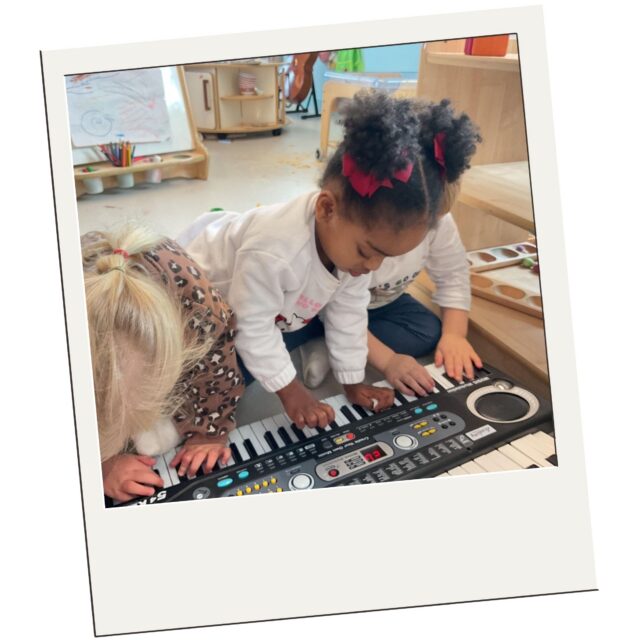
Making music together is a shared experience.
Children can sing in a group, take turns with instruments, copy each other’s movements and learn to listen to what other people are doing.
This can create natural opportunities to practise cooperation and turn-taking.
You don't need lots of instruments
You don’t need to buy a full collection of musical instruments to introduce music at home.
Try:
- clapping rhythms
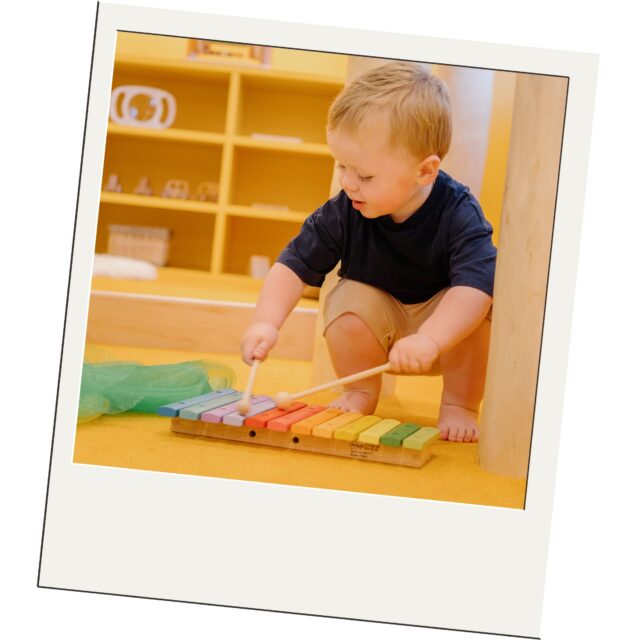
- tapping wooden spoons together
- making shakers from safe household objects
- singing nursery rhymes
- dancing together
- copying each other’s movements
- making up songs about everyday activities
- exploring loud and quiet sounds
The focus doesn’t need to be on getting the “right” sound.
It’s about exploring.
Let children make their own music
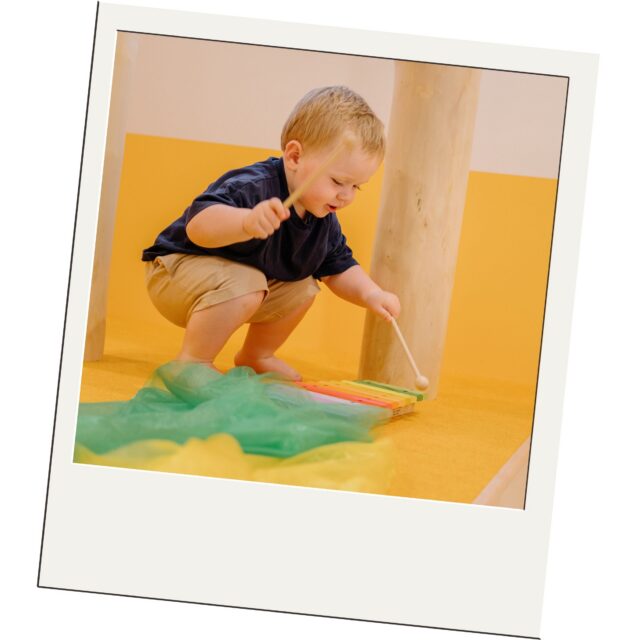
It’s easy to think of music as something children listen to, but creating music can be even more valuable.
Give your child opportunities to experiment with:
- rhythm
- volume
- tempo
- different instruments
- their own voice
- movement
There doesn’t need to be a finished song at the end.
The process of experimenting is where much of the learning happens.
Music at kinderzimmer
Music is woven into everyday life at kinderzimmer.
Children sing together, explore instruments and experience music as part of their everyday routines rather than something that only happens during a dedicated music lesson.
For preschool children aged three and over, music also forms part of kPlus, our strand of additional activities woven into the preschool experience.
Our music activities have a particular focus on chords and percussion, giving children opportunities to explore rhythm, sound and musical expression.
Explore the kinderzimmer curriculum.
Music doesn’t need to be perfect
A child singing slightly out of tune isn’t doing it wrong.
They’re experimenting.
A toddler banging two objects together isn’t necessarily making noise for the sake of it. They’re discovering cause and effect, rhythm and sound.
And when a baby smiles because you sing the same song for the tenth time, they may simply be enjoying one of the earliest ways we connect with one another.
Music is learning, movement, communication and connection – all wrapped into something children naturally enjoy.