Boosting Early Language and Vocabulary at Home: A kinderzimmer Guide for Families
26/01/26 Knowledge Base Welcome to kinderzimmerBoosting Early Language and Vocabulary at Home: A kinderzimmer Guide for Families
Language is all around us! It’s in the songs we sing, the stories we share, the conversations we have on the walk to nursery, and the quiet moments when children narrate their play. Long before children begin to read or write, they are building the foundations for communication through listening, speaking, and connection.
At kinderzimmer, we know that strong early language development doesn’t come from flashcards or pressure to ‘perform’. It grows through meaningful relationships, rich experiences, and time to explore ideas aloud. Our curriculum, inspired by Steiner, Froebel, and Montessori, supports language development in ways that feel natural, joyful, and deeply embedded in everyday life.
The good news for parents? Many of the most powerful ways to boost language and vocabulary can happen right at home.
Why Early Language Development Matters
Early language and vocabulary are closely linked to:
- Emotional expression and regulation
- Social confidence and relationships
- Thinking, reasoning, and problem-solving
- Later reading and writing development
Children who are exposed to rich, responsive language from an early age are more likely to feel confident expressing their needs, sharing ideas, and engaging with others.
But language development isn’t about how many words a child knows, it’s about how language is used, heard, and understood.
Building Language Through Independence and Real Experiences
The Montessori strand of the kinderzimmer curriculum recognises that language grows best when children are actively involved in real life. Practical experiences give words meaning.
How Montessori supports language
- Naming real objects and actions
- Encouraging children to express needs and choices
- Using precise, respectful language
- Giving children time to respond without interruption
Supporting this at home
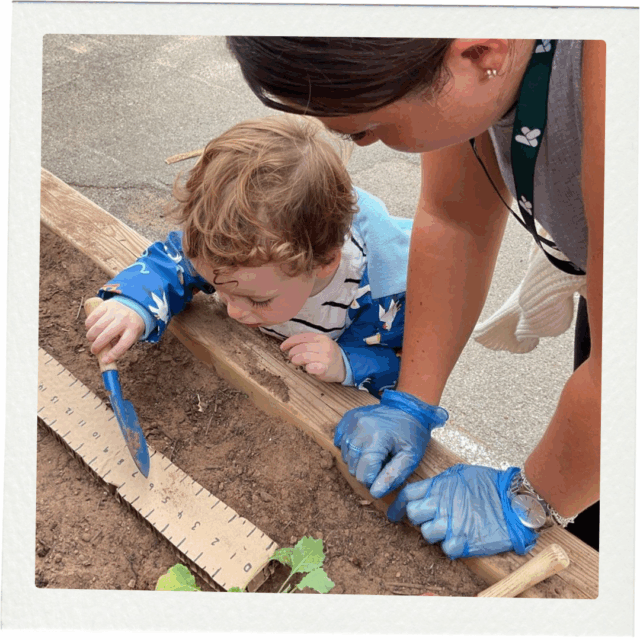
- Talk through everyday tasks – Describe what you’re doing together: “You’re pouring the water carefully,” or “This apple feels smooth.”
- Use accurate vocabulary – Children can handle rich language, words like enormous, fragile, or ingredients help expand understanding.
- Encourage independence with words – Give children space to ask, explain, and try again if they struggle to find the right word.
When children connect language to real experiences, vocabulary becomes meaningful rather than memorised.
Language Through Play, Interaction, and Exploration
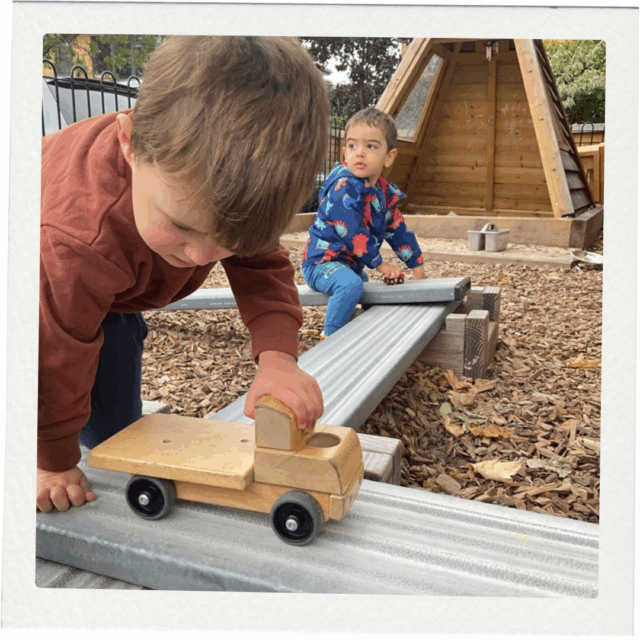
Froebel believed that children make sense of the world through play, and language is a natural part of that process. At kinderzimmer, play-based learning offers constant opportunities for conversation, negotiation, and storytelling.
Froebelian language in action
- Role-play and small-world play
- Collaborative building and problem-solving
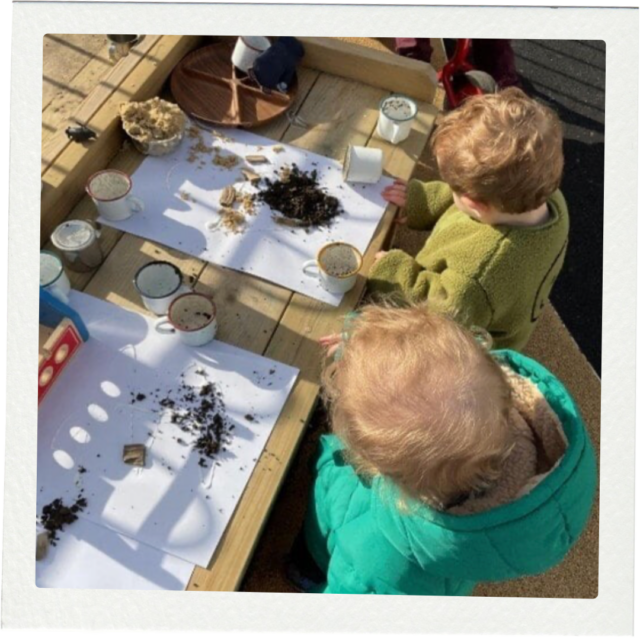
- Talking together during outdoor exploration
- Shared experiences that invite conversation
Ways to encourage language through play at home
- Join their play without taking over – Follow your child’s lead and add language gently: “I see the bear is going on a journey.”
- Ask open-ended questions – “What do you think will happen next?” invites more language than “What colour is this?”
- Value talk during play – Children often use more complex language when they feel relaxed and engaged.
Play creates a low-pressure environment where language can flourish naturally.
Nurturing Language Through Story, Rhythm, and Wonder
The Steiner strand brings imagination, storytelling, creativity, and rhythm into daily life. It recognises that young children learn through their senses and emotions as much as through thinking.
At kinderzimmer, Fantasy and Fable play a vital role in helping children understand themselves and the world around them.
How Steiner principles support children
- Storytelling to explore emotions and values
- Music, rhythm, and repetition to create security
- Imaginative and role-play experiences
- A calm, nurturing environment that supports emotional development
Ways to encourage wonder at home
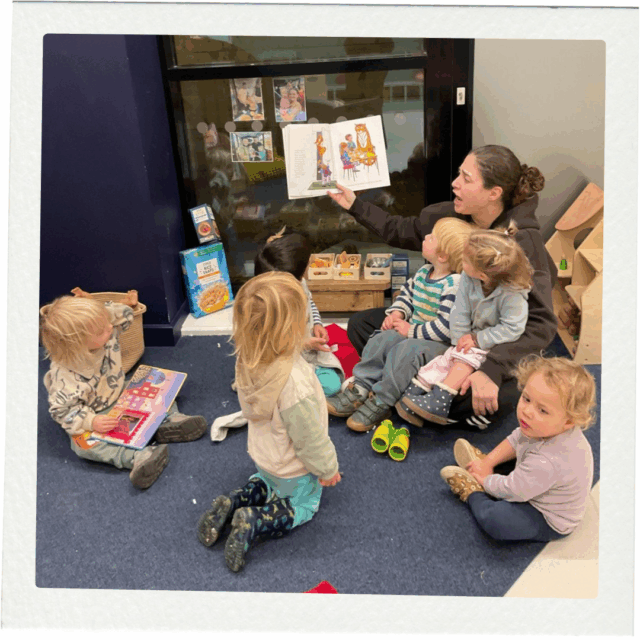
- Share stories daily: Read, retell, or make up stories together — repetition is comforting and valuable.
- Encourage imaginative play: Simple props can spark rich storytelling and role-play.
- Create gentle rhythms: Predictable routines help children feel safe and ready to learn.
Wonder helps children connect learning with meaning, empathy, and creativity.
How Our Three Strands Work Together
The Steiner-inspired strand of our curriculum places great importance on storytelling, music, rhyme, and rhythm. These experiences support not only vocabulary, but memory, listening skills, and emotional understanding.
Why rhythm and story matter
- Repetition helps children internalise language
- Stories give context and meaning to new words
- Songs and rhymes support pronunciation and flow
- Imagination deepens understanding and expression
Bringing Steiner principles into family life
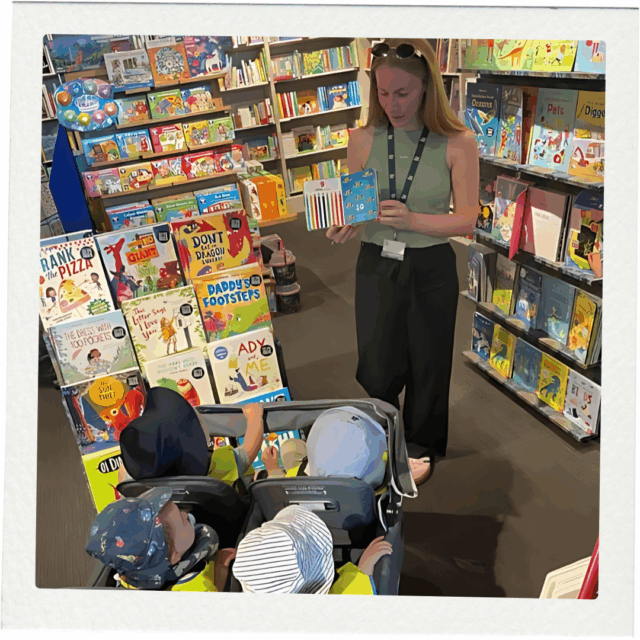
- Read and tell stories daily – Revisit favourite books, repetition is comforting and valuable.
- Sing together – Songs and nursery rhymes support language even before children speak fluently.
- Create calm, shared moments – Storytime, especially at the same time each day, builds anticipation and connection.
Through story and rhythm, children experience language as something alive and expressive.
The Power of Conversation
One of the most effective ways to boost vocabulary is simply talking with your child, not at them.
Try to:
- Listen fully and respond with interest
- Extend what your child says:
Child: “Big dog!”
Adult: “Yes, a big, fluffy dog with a long tail.”
- Avoid rushing to correct, model language instead
These small moments of connection build confidence and encourage children to keep communicating.

Everyday Opportunities for Language-Rich Moments
Language learning doesn’t need to be scheduled. Everyday routines are full of possibility:
- Cooking together introduces descriptive and mathematical language
- Walks encourage observation and discussion
- Tidying up supports sequencing and instruction
- Mealtimes offer space for shared conversation
At kinderzimmer, we intentionally create environments where language flows naturally throughout the day, not just during planned activities.
A Shared Approach Between Home and kinderzimmer
At kinderzimmer, practitioners carefully observe children’s communication and vocabulary development, responding with thoughtful interactions, stories, songs, and experiences that meet children where they are.
When families continue this approach at home, through conversation, play, and shared moments, children benefit from consistency and confidence across both environments.
Final Thoughts
Supporting early language and vocabulary doesn’t mean pushing children to speak sooner or know more words. It means creating rich, responsive environments where language feels purposeful, enjoyable, and connected to real life.
By drawing on the principles of Montessori independence, Froebelian play, and Steiner-inspired story and rhythm, families can support language development in ways that feel natural and nurturing.